Klaipėda and the maritime gateway
Klaipėda is Lithuania’s principal Baltic port city and a useful starting point for studying maritime trade, transport and port development. Ports are systems, not just waterfronts. They depend on approaches, quays, storage, labour, administration and connections inland. Museum displays and historical records can help explain how these pieces changed across different periods.
The Lithuanian Sea Museum is a real, identifiable institution connected to the country’s maritime heritage. Its current offer, exhibitions, visitor access and facilities must be checked directly with the museum. This guide does not claim that a particular vessel, gallery or programme is available at a given time.
Open coast and lagoon
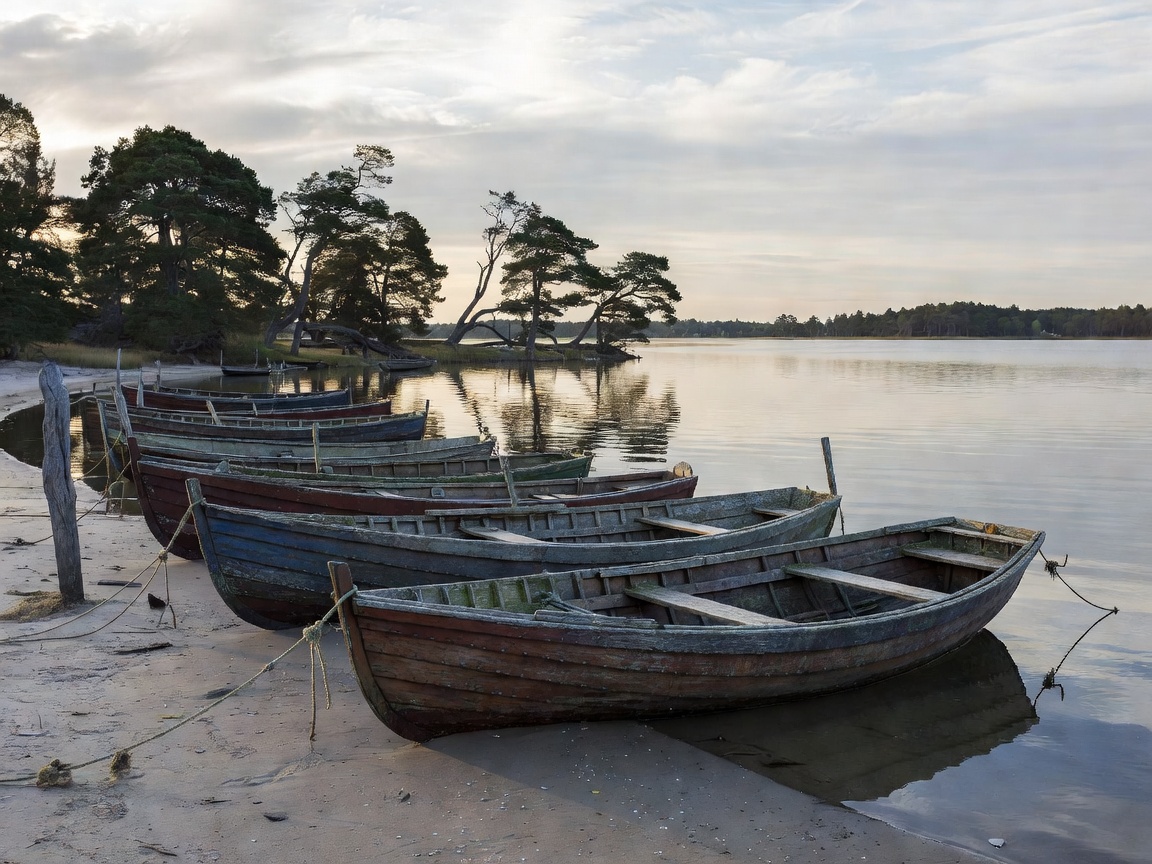
Lithuania’s maritime landscape includes exposed Baltic coastline and the more sheltered Curonian Lagoon. These water environments create different practical conditions. Open water, beaches, dunes, lagoon routes and river mouths each shape settlement, movement and work. Fishing communities adapted boats and methods to local waters, seasons and markets. A regional collection can help place objects within the shore and community that produced them.
Fishing heritage is broader than gear. It may include boat construction, maintenance, nets, storage, processing, household labour, market exchange and local vocabulary. Ask how a collection explains the relationship between technique and environment. A displayed tool is more useful when its purpose, maker and setting are clear.
Trade, transport and port history
Maritime trade links local production and consumption to routes that extend beyond a single harbour. Records, maps, cargo references and infrastructure can help visitors understand those connections. Port histories also involve change: technology, political boundaries, shipping practices and city development all influence how a waterfront works. Do not treat a modern port view as a direct picture of an earlier era.
Transport history connects sea routes with roads, rail and inland movement. Look for interpretation that explains how goods passed between vessels and land networks. A transport collection may place marine movement beside other modes, while a specialist maritime institution can concentrate on vessels and port systems. Each offers a different scale of analysis.
Ship collections and navigation
Ship collections may preserve boats, models, plans, tools, photographs or oral accounts. These formats show different evidence. A model can clarify shape and structure; a plan can document design; a boat can make scale and material visible. Conservation needs may limit access or display. Check whether an object is currently presented and whether visitors can enter any vessel.
Navigation heritage includes charts, instruments, signals and the knowledge required to interpret them. A chart supports route planning by representing coast and water; practical navigation also depends on conditions and local expertise. Coastal markers and lighthouses can be important to regional history, but not every structure is a museum or open site. Confirm responsible-site information before travel.
Regional heritage and archaeology
Maritime archaeology examines material evidence associated with water, including submerged and waterlogged contexts. Its value lies in context and careful interpretation, not simply in the age of an object. Conservation, documentation and site conditions influence what can be shown. Regional heritage may also connect shore settlement, environmental change and the material record. These topics help explain why maritime culture is both social and physical.
Compare an urban museum with a local collection by asking what each preserves. Klaipėda can provide a port-city frame. A coastal or lagoon community can show local practices in greater detail. Neither perspective replaces the other. A balanced itinerary pairs institutional interpretation with attention to landscape, where access and conditions allow.
Choose a useful visit
Match the site to your question. Select a maritime museum for broad context; a port-focused display for infrastructure and trade; a local collection for fishing and community practices; or an archaeological interpretation for material evidence and conservation. Before travelling, check current opening hours, prices, exhibition status, language options, accessibility, transport and seasonal conditions. Coastal weather and local connections can affect plans.
- Confirm current access and any temporary closures with the institution.
- Ask whether a ship or named object is on display.
- Check travel links between Klaipėda and coastal locations.
- Allow time to understand the lagoon and shore as part of the history.
Good for
- Visitors studying port history and maritime trade.
- Research into lagoon fishing and coastal communities.
- Comparing ship collections with landscape-based heritage.
What to know
Information on exhibitions, prices, opening times and access can change. Confirm it directly with the institution before visiting. The guide is independent and is not affiliated with museums, ports or public authorities.
Related guides
Baltic regions · Museum types · Latvia · Estonia
CORRECTION / ENQUIRY