Start with the collection format
Maritime heritage can be held in a national museum, a specialist institution, a local history collection, a preserved vessel, an outdoor site or an archive. One organization may cover several subjects. Another may focus on one town, craft or industry. The category is a useful starting point, but the institution’s own current description is the authority on its collection and visitor offer.
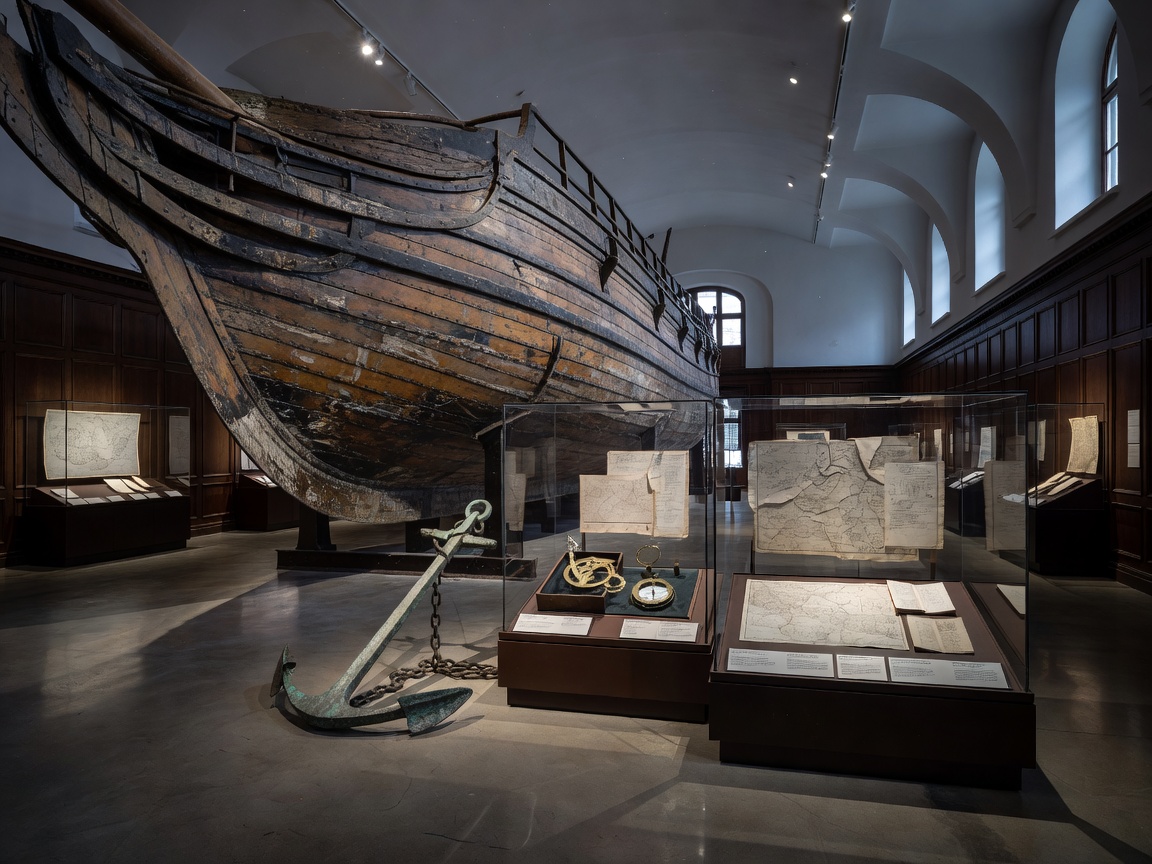
Objects gain meaning through context. A compass can explain navigation, trade, training or shipboard routine. A model may show construction features, while a port ledger may reveal administration and cargo movement. Look for labels that connect material evidence to people, place and time.
Common categories
- Maritime museums. Broad collections can include vessels, maps, instruments, records, trade objects and coastal life.
- Ship museums. A preserved vessel or ship-focused gallery may interpret construction, work aboard, propulsion, service and restoration. Access to a real vessel can be restricted for conservation or safety.
- Naval museums. These may cover naval history, personnel, equipment, conflict, state institutions and ship technology. Check the stated scope; the label does not mean every period is represented.
- Port museums. These explore harbour development, cargo handling, waterfront labour, trade routes, shipping administration and the changing form of a port.
- Fishing heritage museums. Expect material about boats, nets, fish processing, household work, seasonal practices and local economies. Regional variation is central.
- Open-air maritime collections. Outdoor sites can preserve boats, boat sheds, workshops or working landscapes. Weather, seasonal access and conservation may affect availability.
- Lighthouse museums. Interpretation may include optics, keepers’ work, signalling, safety and the history of a coastal navigation aid. A lighthouse site is not automatically a museum.
- Industrial museums. Shipyards, engine works, repair facilities and manufacturing processes may be represented through machinery, plans, tools and worker histories.
- Transport museums. These place marine transport beside rail, road or inland-water movement. They can clarify how a port connects to a wider network.
- Shipbuilding collections. Plans, tools, models and workshop evidence explain design, materials, skilled labour and repair.
- Navigation collections. Charts, compasses, instruments, signals and training materials show how mariners determined position and communicated. Pilotage means guiding vessels through local waters.
- Maritime archaeology. This field studies material evidence from underwater or waterlogged contexts. Displays may explain survey, recovery, conservation and interpretation rather than present a large object collection.
Read the evidence, not only the label
Ask what kinds of evidence are present. Original objects, replicas, photographs, oral histories and digital reconstructions each answer different questions. A chart can show intended routes, but not necessarily the full experience of a voyage. A vessel can reveal spatial constraints, but conservation may prevent visitors from entering every area. A photograph documents a moment; its caption and provenance determine how much it can tell.
Compare urban and regional collections with care. A large city institution may connect local objects to national or international narratives. A small regional collection can retain detailed knowledge of a specific community, craft or shoreline. Neither format is inherently more complete. Their research access, interpretation and conservation responsibilities may differ.
Choose by research question
For vessel design, seek plans, models or a preserved craft. For trade, look for cargo records, maps, warehouse history and port infrastructure. For community history, check whether local work and household life are represented alongside vessels. For navigation, look for instruments, chartmaking, signals and explanations of practical use. For industrial history, find evidence of labour, machinery and repair. For archaeology, look for clear explanations of context and conservation.
Useful selection criteria include collection scope, interpretation quality, language access, physical access, location, transport and current opening status. Confirm whether an object is on view before planning around it. Collections rotate, spaces close for work, and heritage sites can have seasonal operating patterns.
Good for
- Choosing a collection that matches a specific maritime interest.
- Comparing ships, ports and community histories across countries.
- Planning around object type, interpretation and access needs.
What to know
Do not infer prices, opening hours or access conditions from an older listing. Contact the institution for current information on exhibitions, tickets, photography, accessibility and seasonal changes. The guide is independent and does not represent any listed institution.
Related guides
Baltic regions · Latvia · Lithuania · Estonia
CORRECTION / ENQUIRY